
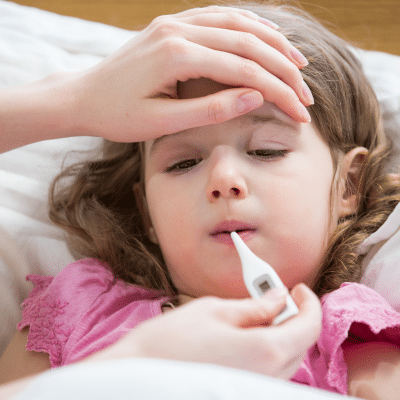
 As a parent, nothing triggers concern quite like a child fever. It’s one of the most common reasons families reach out to us at Commonwealth Pediatrics in Richmond, VA. While many child fevers are simply a sign that your child’s immune system is fighting off a mild virus—like the common cold—some fevers can signal a more serious illness.
So how can you tell the difference? Here’s what you need to know to confidently navigate the next fever episode in your home.
Understanding Child Fever
First, let’s clarify what counts as a child fever. A child is considered to have a fever when their temperature reaches:
- 4°F (38°C) or higher when taken rectally
- 5°F (37.5°C)with an oral thermometer
- 99°F (37.2°C)with an underarm thermometer
A fever is a symptom—not a diagnosis. It means the body is responding to something, most often an infection. Fevers actually help fight off viruses and bacteria, so while uncomfortable, they’re often a sign the immune system is doing its job.
Signs Your Child Fever Is Due to a Cold
Most child fevers are due to viral infections like the common cold. These are usually not cause for concern. Signs that your child’s fever is likely related to a cold include:
- Runny or stuffy nose
- Sneezing or mild cough
- Mild sore throat
- Low to moderate fever (100.4°F–102°F)
- Your child is still playing, eating, and drinking
- Fever lasting 1–3 days
In these cases, your child probably doesn’t need to see a doctor. You can manage the fever at home with rest, fluids and fever-reducing medications like acetaminophen or ibuprofen. (Always consult your pediatrician for proper dosing.)
When Child Fever Could Be Serious
While most child fevers resolve on their own, some may signal a more serious issue. Watch for these warning signs:
High or Prolonged Fever
- Infants under 3 months: Any fever of 100.4°F or higher is a medical emergency.
- Children 3–6 months: Fevers over 102°F should be evaluated.
- Older children: Fevers over 104°F or lasting more than 3 days warrant a call to your pediatrician.
Lethargy or Unresponsiveness
If your child is difficult to wake, unusually quiet, or confused, the fever may indicate something more serious.
Trouble Breathing
Wheezing, rapid breathing, or struggling to breathe are urgent symptoms that need immediate medical attention.
Dehydration
Fevers can lead to fluid loss. A fever accompanied by dry mouth, no tears when crying, or decreased urination may signal dehydration.
Rash
A rash that appears with a fever, especially one that spreads quickly or resembles bruising, should be evaluated urgently.
When to Call Commonwealth Pediatrics
At Commonwealth Pediatrics, we know child fever can be worrying—especially for infants and toddlers. If you’re ever unsure about what to do, don’t hesitate to call. We offer guidance over the phone and can schedule same-day visits when needed.
Whether your fever is due to a simple cold or something more complex, our experienced team is here to help with expert, compassionate care.
Tips for Managing Child Fever at Home
- Use a digital thermometer for accurate readings.
- Dress your child in light layers and keep the room cool.
- Offer plenty of fluids to prevent dehydration.
- Use fever reducers like acetaminophen or ibuprofen (never aspirin).
- Let your child rest—playful behavior is usually a good sign the child fever isn’t serious.
Final Thoughts
Most cases of child fever are caused by common, mild illnesses and resolve within a few days. Still, it’s important to recognize the signs that suggest your child may need medical attention.
Request Your Appointment in Richmond, VA Today
At Commonwealth Pediatrics in Richmond, VA, your child’s health is our top priority. Whether it’s a mild fever or something more concerning, we’re here to support your family every step of the way. Request your child’s appointment today!